

How to Build a Basement Home Theatre
A well-designed basement home theatre can transform your home into a private cinema. With proper planning in layout, soundproofing, wiring, and equipment, you can achieve a true cinematic experience.
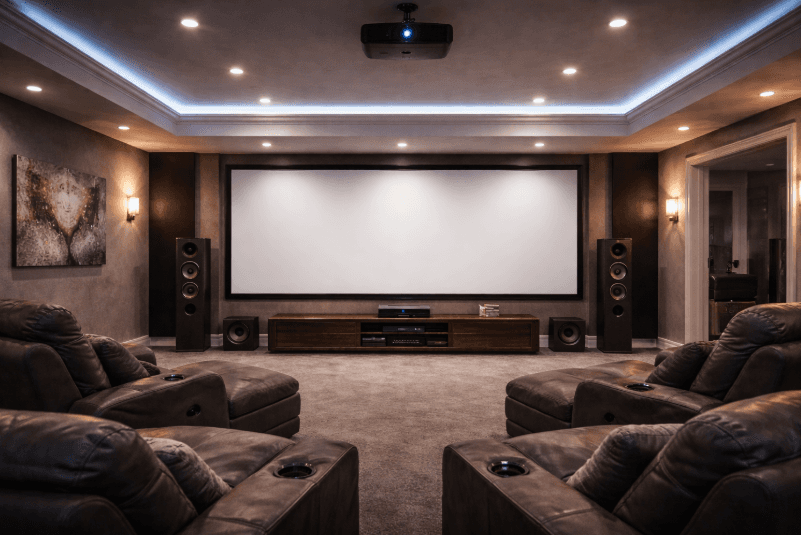
Step 1 – Choose the Right Space
The basement is the ideal location. It offers better sound isolation and minimal disturbance.
Recommended size: approx. 20 × 13 ft.
Keep it away from bedrooms for better noise control.
Step 2 – Soundproofing & Insulation
Soundproofing is essential for performance:
- Aim for R30 insulation in walls and ceiling
- Use soundproof drywall (e.g., QuietRock)
- Install solid-core doors to reduce sound leakage
Step 3 – Surround Sound Setup (7.1)
A standard 7.1 system includes:
- Front: left, center, right
- Side and rear surround speakers
- Subwoofer
Wiring tips:
- Standard speakers: 16-4 wire
- Front channels: 12 or 14 gauge
Step 4 – Video & Pre-Wiring
Plan wiring before finishing walls:
- HDMI cables for video
- CAT5/6 for control systems
- Centralized equipment storage
This ensures a clean, hidden setup.
Step 5 – Lighting Design
Lighting sets the mood:
- Recessed ceiling lights
- Wall sconces
- Dimmable lighting system
Step 6 – Wall Construction
Options include:
- Double drywall layers
- High-density insulation
👉 Tip: Don’t overlook door soundproofing
Step 7 – Screen & Equipment
Recommended setup:
- Screen size: 110–120 inches
- Projector + AV receiver
- Optional hidden speaker design
Summary
A successful home theatre depends on:
Layout + soundproofing + wiring + lighting + equipment
Proper planning leads to a much better experience.
FAQ
Q1: Do I need a permit for a home theatre?
Permits may be required if electrical or structural changes are involved.
Q2: How much does it cost?
Basic setups start around $10,000+, while high-end builds cost more.
Looking to build your own basement home theatre?
We offer full design and build services to bring your vision to life.
📞 Phone: 905-597-8566
🌐 Website: https://www.renocompass.ca/
