

In Canadian residential design, skylights are more than architectural features — they are strategic lighting solutions that improve natural brightness and spatial perception.
When properly designed and installed, a skylight can significantly enhance openness, visual height, and overall atmosphere.
This guide explains what homeowners in Toronto and the GTA should know before installing a skylight.
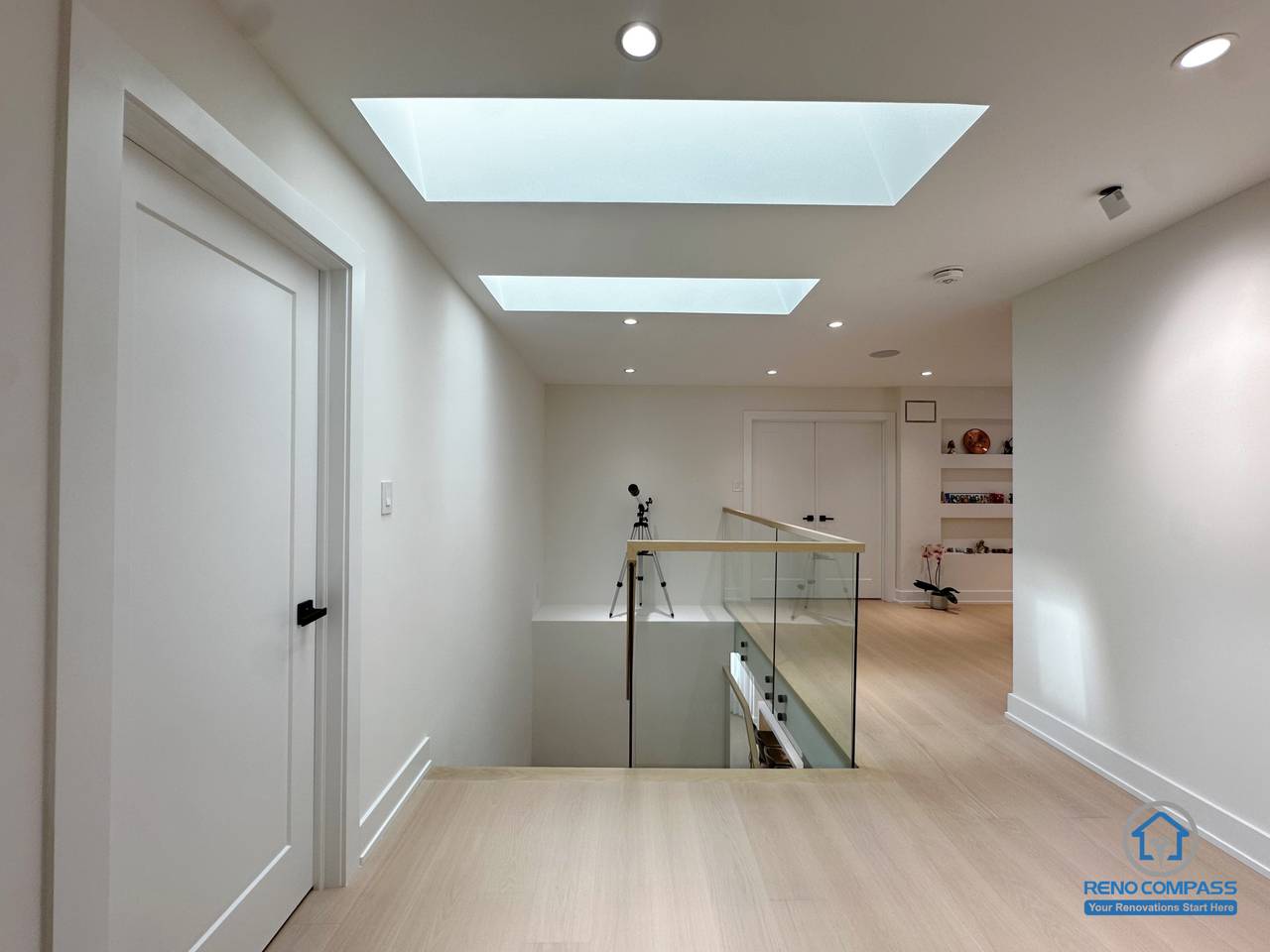
What Is a Skylight?
A skylight is a roof-mounted window that introduces natural light from above.
Unlike traditional wall windows, skylights allow daylight to enter vertically, creating:
-
Increased natural brightness
-
Improved ceiling height perception
-
Better light distribution
-
A stronger sense of openness
In modern Toronto homes, skylights are often integrated into renovation projects to improve interior lighting quality.
Common Skylight Design Options
Skylights can be customized based on roof structure and layout.
Common configurations include:
-
Rectangular skylights (ideal for staircases and corridors)
-
Large-format skylights (for open-to-above spaces)
-
Square skylights (commonly used in bathrooms and laundry rooms)
-
Custom-proportioned skylights aligned with stair layouts
Proper proportion and placement are essential to maintain architectural balance.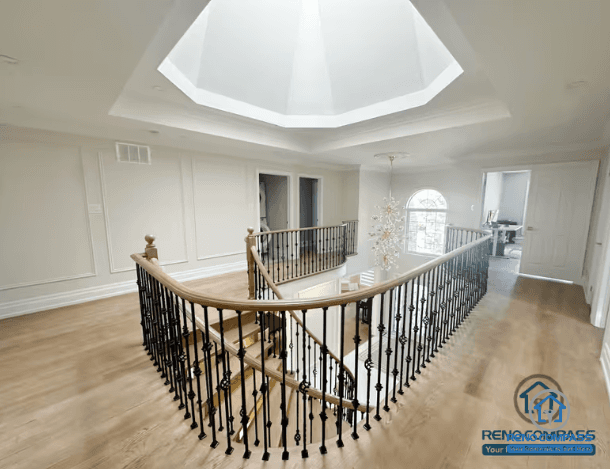
Where Are Skylights Most Effective?
In many Canadian homes, skylights are particularly beneficial in areas with limited side windows.
Staircases
Natural light can travel vertically through multiple levels, enhancing openness.
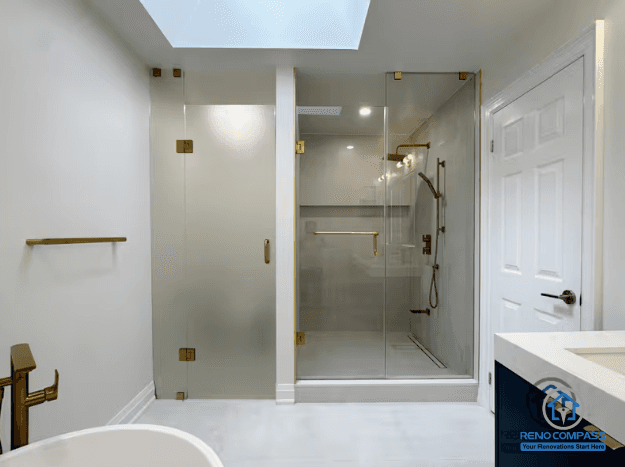
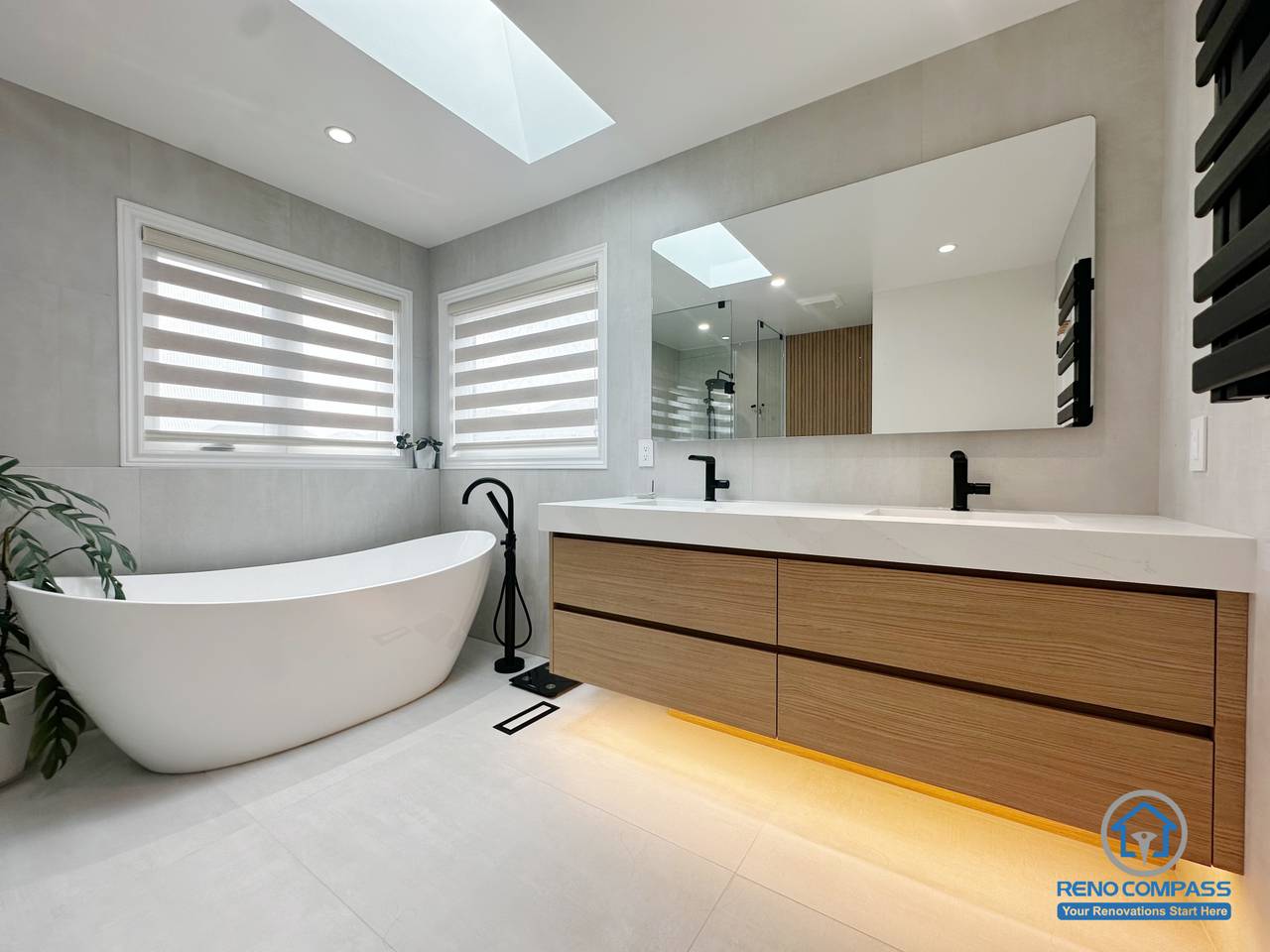
Bathrooms
Skylights provide daylight while maintaining privacy.
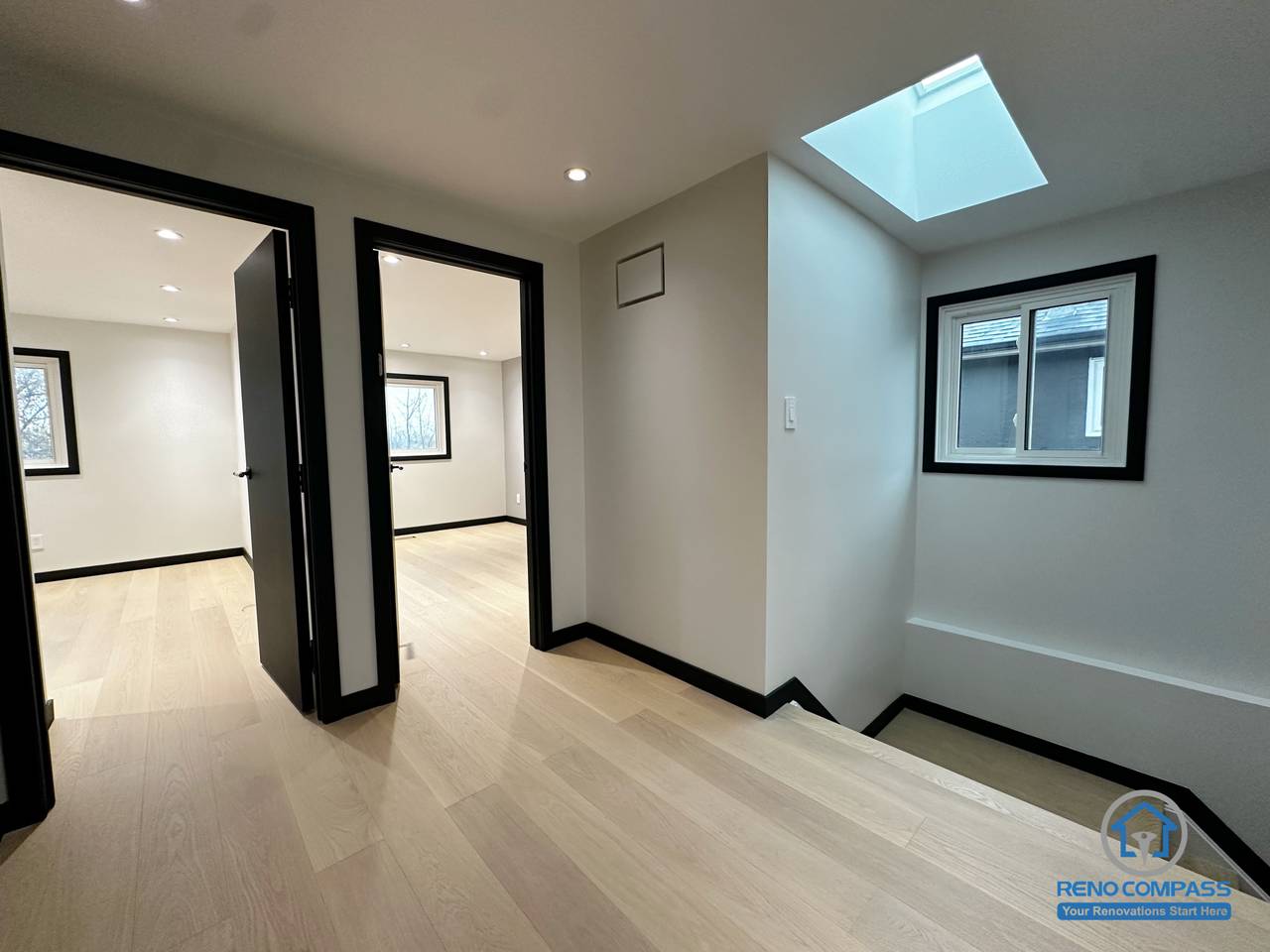
Hallways
Interior corridors without exterior walls benefit significantly from overhead light.
Laundry Rooms
Many laundry areas lack windows. Skylights improve visibility and comfort.
Home Offices
Natural daylight can improve visual comfort and overall ambiance.
Structural Considerations in Canadian Homes
Before installing a skylight, it is important to understand the roof framing system.
Most homes in Toronto use either:
-
Rafter framing
-
Truss framing
Truss systems typically have spacing limitations (commonly around 21.5 inches), which may restrict skylight width unless structural modification is performed.
Professional installation may require:
-
Structural reinforcement
-
Engineering review (if modifying trusses)
-
Waterproof membrane integration
-
Insulated flashing systems
-
Energy-efficient Low-E triple-glazed glass
Careful planning ensures long-term durability and performance.
Do You Need a Building Permit for Skylight Installation in Toronto?
In most municipalities across Ontario, including Toronto, skylight installation requires a building permit.
This is because the process often involves structural modification to the roof assembly.
Permit requirements may include:
-
Structural drawings
-
Engineering approval (if applicable)
-
Compliance with Ontario Building Code
-
Waterproofing and energy performance standards
Following proper permit procedures ensures the installation meets safety and code requirements.
Benefits of Skylight Installation
When professionally installed, skylights offer long-term advantages:
-
Increased natural daylight
-
Reduced daytime artificial lighting usage
-
Enhanced spatial perception
-
Improved interior comfort
-
Architectural enhancement
A skylight is not simply an aesthetic upgrade — it is a functional lighting improvement.
Is a Skylight Right for Your Home?
A skylight may be a suitable option if your home includes:
-
Open stairwells
-
Dark upper-level corridors
-
Windowless bathrooms
-
Enclosed functional rooms
Introducing natural light from above can transform how a space feels throughout the day.
Final Thoughts
Skylight installation in Toronto requires thoughtful planning, structural understanding, and proper permit approval.
When integrated correctly, a skylight can significantly improve natural lighting and interior experience.
If you are considering a skylight as part of your renovation project, structural assessment and permit planning should be addressed early in the design process.
