

Toronto HVAC Rough-In Construction Standards Guide
HVAC rough-in is one of the most important stages in any Toronto renovation or construction project. Whether you are planning a whole home renovation, basement remodel, home addition, or multi-unit conversion, the quality of the HVAC rough-in will directly affect airflow performance, system efficiency, inspection approval, and long-term comfort.
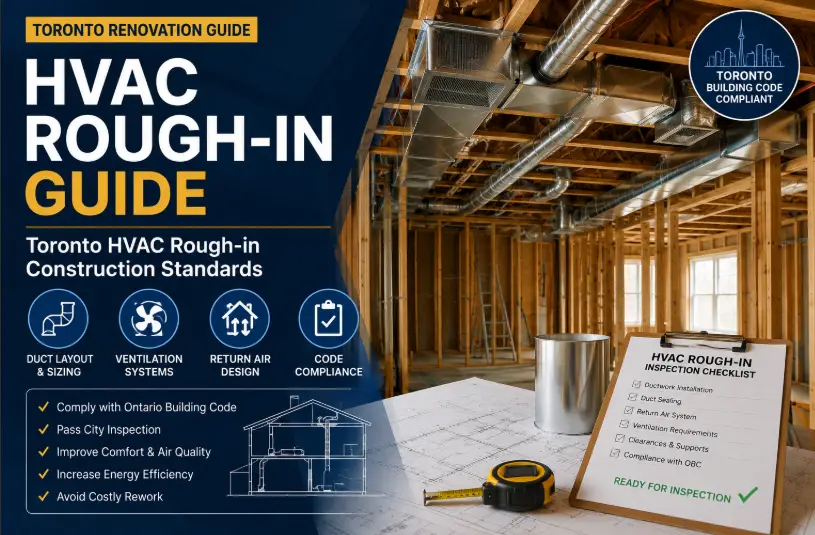
In simple terms, HVAC rough-in refers to the installation of ductwork, ventilation systems, return air layouts, and HVAC infrastructure before drywall and insulation are completed.
Because this stage usually requires city inspection, all work must comply with Ontario Building Code requirements and Toronto permit regulations.
For experienced Toronto renovation companies, HVAC rough-in is not just about installing ducts. It is the foundation of a properly functioning HVAC system.
What Is HVAC Rough-In?
HVAC rough-in typically takes place after framing is completed but before drywall installation begins.
This phase usually includes:
- Ductwork installation
- Return air system layout
- Fresh air ventilation
- Exhaust systems
- Furnace and HRV placement
- Mechanical room planning
- HVAC equipment preparation
Toronto HVAC rough-in inspections are generally required before walls and ceilings are closed.
External reference:
https://www.toronto.ca/services-payments/building-construction/building-permit/after-you-apply-for-a-building-permit/building-inspections/about-building-inspections/when-to-call-for-inspection-of-small-buildings/
If problems are discovered after drywall installation, repairs and modifications can become significantly more expensive.
Why HVAC Rough-In Matters in Toronto Renovation Projects
Many homeowners assume HVAC work simply means installing equipment.
However, the actual performance of a heating and cooling system is often determined during the rough-in stage.
Poor HVAC rough-in planning may lead to:
- Uneven temperatures
- Weak airflow
- Noise issues
- Basement comfort problems
- Poor air circulation
- Increased energy consumption
- Failed inspections
This is especially common in older Toronto homes where existing ductwork no longer matches modern HVAC requirements.
That is why experienced Toronto renovation companies prioritize HVAC rough-in planning before construction progresses.
Common HVAC Rough-In Components
Ductwork Layout and Sizing
Duct layout directly impacts air circulation and comfort.
Professional HVAC rough-in planning typically considers:
- Home size
- Ceiling height
- Room distribution
- Furnace capacity
- Airflow balancing
- Return air positioning
Ontario Building Code also regulates certain ventilation and ductwork standards.
Improper duct sizing may reduce HVAC efficiency even when high-end equipment is installed.
Return Air System Design
Many airflow problems in older homes are caused by insufficient return air systems.
Common issues include:
- No basement return air
- Poor second-floor airflow
- Pressure imbalance
- Stale indoor air
A properly designed HVAC rough-in includes strategic return air planning to improve circulation and system efficiency.
Fresh Air and Ventilation Systems
Ventilation systems are a major inspection focus in Toronto renovation projects.
These systems may include:
- Bathroom exhaust fans
- Kitchen exhaust systems
- HRV or ERV systems
- Fresh air intake systems
In basement renovations and multi-unit conversion projects, ventilation compliance is especially important for passing inspection.
What Does HVAC Rough-In Inspection Check?
During HVAC rough-in inspection, city inspectors commonly review:
- Duct sizing
- Duct support and sealing
- Return air systems
- Ventilation layout
- Furnace clearances
- HVAC placement
- Permit compliance
- Ontario Building Code compliance
Inspections must usually occur before drywall installation.
If the inspection fails, portions of the wall or ceiling may need to be reopened.
Why HVAC Rough-In Is More Complex in Older Toronto Homes
Older Toronto homes often present unique HVAC challenges.
Common problems include:
- Limited ceiling space
- Undersized existing ductwork
- Missing return air systems
- Structural beam conflicts
- Boiler-to-forced-air conversions
- Previous renovation modifications
As a result, HVAC rough-in in older homes often requires:
- Duct redesign
- Mechanical relocation
- Airflow optimization
- Coordination with framing and plumbing trades
This is one reason experienced Toronto renovation companies place strong emphasis on HVAC planning early in the project.
Why HVAC Rough-In Should Not Be Chosen Based on Price Alone
Many homeowners compare HVAC projects only by equipment pricing.
However, long-term HVAC performance depends heavily on:
- Ductwork quality
- Return air planning
- Ventilation design
- Air balancing
- Rough-in workmanship
Low-cost installations may eventually lead to:
- Poor airflow
- Noise complaints
- Higher utility bills
- Reduced equipment lifespan
- Expensive future repairs
For Toronto home renovation projects, a properly designed HVAC rough-in is often more important than simply installing larger equipment.
How to Choose a Professional HVAC Rough-In Team
A qualified HVAC rough-in contractor should understand:
- Ontario Building Code
- Toronto permit procedures
- Ductwork design
- Return air planning
- Ventilation requirements
- Inspection preparation
- Coordination with other trades
In basement renovations and multi-unit projects, proper HVAC rough-in planning can significantly improve inspection success and long-term system performance.
Frequently Asked Questions
When does HVAC rough-in inspection happen?
HVAC rough-in inspection usually takes place:
- After duct installation
- Before drywall installation
- Before insulation work begins
The city inspector reviews whether the HVAC system complies with approved permit drawings and Ontario Building Code requirements.
What happens if HVAC rough-in fails inspection?
If HVAC rough-in does not meet code requirements, the project may face:
- Inspection failure
- Construction delays
- Additional repair costs
- Reopened walls or ceilings
- Airflow and comfort problems
That is why the rough-in stage is considered one of the most important parts of an HVAC project.
Summary
HVAC rough-in is much more than simply installing ductwork.
It directly affects:
- Air circulation
- HVAC efficiency
- Inspection approval
- Energy performance
- Long-term indoor comfort
Whether you are planning a basement renovation, whole home remodel, or home addition, proper HVAC rough-in planning is essential for a successful Toronto renovation project.
If you are planning a Toronto renovation, basement remodel, or HVAC upgrade, it is important to ensure your HVAC rough-in meets current Ontario Building Code and Toronto inspection requirements before construction begins.
Phone: 905-597-8566
Website: https://www.renocompass.ca/
