

What Is Building Code? What Toronto Homeowners Should Know Before Renovating
When planning a Toronto renovation project, many homeowners hear the term “Building Code” but are not entirely sure what it means. Whether you are planning a whole home renovation, basement remodel, home addition, or HVAC upgrade, Building Code plays a major role in determining whether your project is safe, legal, and approved by the city.
In simple terms, Building Code is a set of construction regulations that establish minimum standards for building safety, structure, fire protection, ventilation, plumbing, and electrical systems.
For any professional Toronto renovation company, understanding Building Code is essential for ensuring a project passes permit approval and city inspection.
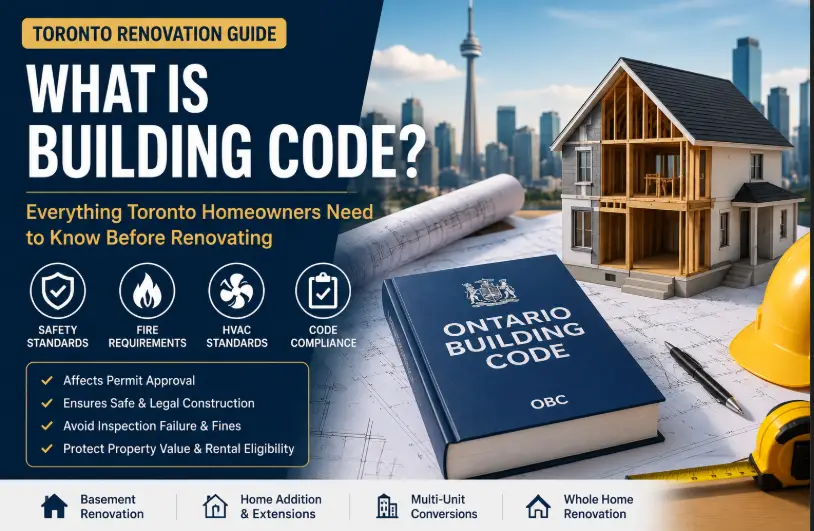
What Is Building Code?
Building Code refers to the legal construction standards that regulate how buildings must be designed and built.
In Ontario, renovation and construction projects must follow the Ontario Building Code (OBC), which helps ensure homes remain safe and structurally sound.
Building Code requirements commonly apply to:
- Structural framing
- HVAC systems
- Plumbing and drainage
- Electrical layouts
- Fire separation
- Stair dimensions
- Basement egress windows
- Ventilation and insulation
The goal of Building Code is to protect homeowners, occupants, and property value over the long term.
External Reference:
Ontario Building Code Official Website:
Why Building Code Matters in Toronto Renovation Projects
Many homeowners focus mainly on design and budget during a renovation.
However, Building Code often becomes the deciding factor during permit review and inspection.
If a renovation does not comply with Building Code requirements, it may lead to:
- Permit rejection
- Failed inspection
- Stop work orders
- Costly rework
- Legal basement rental issues
- Insurance complications
This is especially important in older Toronto homes, where outdated electrical, HVAC, and structural systems may no longer meet modern standards.
That is why experienced Toronto renovation companies typically review Building Code requirements before construction begins.
https://www.ontario.ca/page/building-code
Common Toronto Renovation Projects Affected by Building Code
Basement Renovations
Basement renovations are one of the most common projects in Toronto.
However, legal basement projects usually require compliance with:
- Minimum ceiling height
- Proper egress window sizing
- Fire-rated separation
- Smoke and CO detectors
- HVAC ventilation standards
- Insulation and moisture protection
Without proper compliance, a basement may fail inspection or be considered an illegal secondary unit.
HVAC System Upgrades
Building Code also affects HVAC installations and upgrades.
This includes:
- Furnace clearances
- Duct sizing
- Return air systems
- Fresh air ventilation
- Heat pump electrical requirements
- Exhaust vent placement
Many homeowners assume larger HVAC equipment is always better, but improperly sized systems can create airflow imbalance, energy waste, and comfort issues.
Professional HVAC planning should always align with Building Code requirements and the actual layout of the home.
Staircases and Structural Safety
In whole home renovations and interior remodeling projects, staircase modifications are common.
However, Building Code regulates:
- Stair rise and run dimensions
- Handrail height
- Landing sizes
- Safety clearances
- Structural load requirements
Ignoring these standards may result in failed inspections and unsafe living conditions.
What Is the Difference Between Building Code and Zoning?
Many homeowners confuse Building Code with zoning regulations.
They are not the same.
Building Code
Controls how a project must be built safely and legally.
Zoning
Controls what is allowed on a property.
For example:
- Home additions
- Multi-unit conversions
- Legal basement permissions
- Garden suites
These are generally zoning-related matters.
Meanwhile:
- HVAC
- Fire protection
- Structural framing
- Plumbing and ventilation
fall under Building Code requirements.
Professional Toronto renovation projects usually require both zoning review and Building Code compliance.
Why More Toronto Homeowners Are Prioritizing Legal Renovations
In recent years, more homeowners have realized that low-cost construction does not always mean long-term savings.
Projects completed without proper permits or Building Code compliance may create future problems, including:
- Inspection failures
- Property resale complications
- Rental restrictions
- Insurance issues
- Safety concerns
As a result, homeowners are increasingly choosing renovation companies that understand Toronto permit processes and local construction regulations.
How to Choose a Professional Toronto Renovation Company
A qualified renovation team should do more than just construction work.
They should also understand:
- Toronto Building Code
- Permit application requirements
- HVAC and ventilation standards
- Structural safety regulations
- Inspection procedures
- Long-term renovation planning
For whole home renovations and custom upgrades, experience with Building Code compliance can help avoid delays and unnecessary costs.
Frequently Asked Questions
Does every Toronto renovation require a permit?
Not every renovation requires a permit.
However, permits are commonly required for:
- Structural modifications
- Basement renovations
- HVAC system changes
- Home additions
- New plumbing layouts
It is always recommended to confirm permit requirements before starting construction.
What happens if a renovation does not follow Building Code?
Non-compliant renovations may result in:
- Failed inspections
- Rework orders
- Legal liability
- Rental restrictions
- Reduced property value
In serious cases, the city may issue a stop work order.
Summary
Building Code is one of the most important parts of any Toronto renovation project.
It affects:
- Construction safety
- Permit approval
- Inspection success
- HVAC performance
- Property value
- Long-term legal compliance
Whether you are planning a basement renovation, whole home renovation, or interior upgrade, understanding Building Code requirements can help make your project smoother and more successful.
- Toronto Legal Basement Renovation Guide
- Home Addition Process in Toronto
- HVAC Rough-In Requirements for Renovations
If you are planning a Toronto renovation, basement remodel, or home upgrade, it is important to confirm your project meets current Building Code and permit requirements before construction begins.
Phone: 905-597-8566
Website: https://www.renocompass.ca/
